
Shortly after his election victory in 2024, Trump set his sights on acquiring Greenland, a goal he failed during his first presidential term. Behind his renewed focus stand the most influential men in Big Tech, who view Greenland’s abundant rare-earth mineral deposits as vital to the continued development and expansion of technologies such as artificial intelligence. To them, the Greenlanders and Danish government who oppose a US takeover are nothing more than a minor obstacle.
The proposed US takeover of Greenland is a form of colonialism that seeks to enrich individuals and corporations via the exploitation of natural resources and Indigenous peoples. Throughout the modern era, empires used corporations as a colonial weapon to subjugate Indigenous peoples and form resource monopolies abroad. One of the most notorious and successful colonial monopolies in history was the Hudson’s Bay Company of North America.
The tech bros who financially back Trump seek a return to the colonial monopoly of yore because they view ethics and regulations meant to protect the common good as obstacles to technological progress and their self-interests. Unfortunately for us, they have the means to accomplish their vision of the future.
How do we stand up to the immense power and wealth of the current administration and Big Tech? To find the answers, we first need to understand the historical context of Greenland and how it relates to colonialism in North America.
History of Greenland and Attempts at US Acquisition
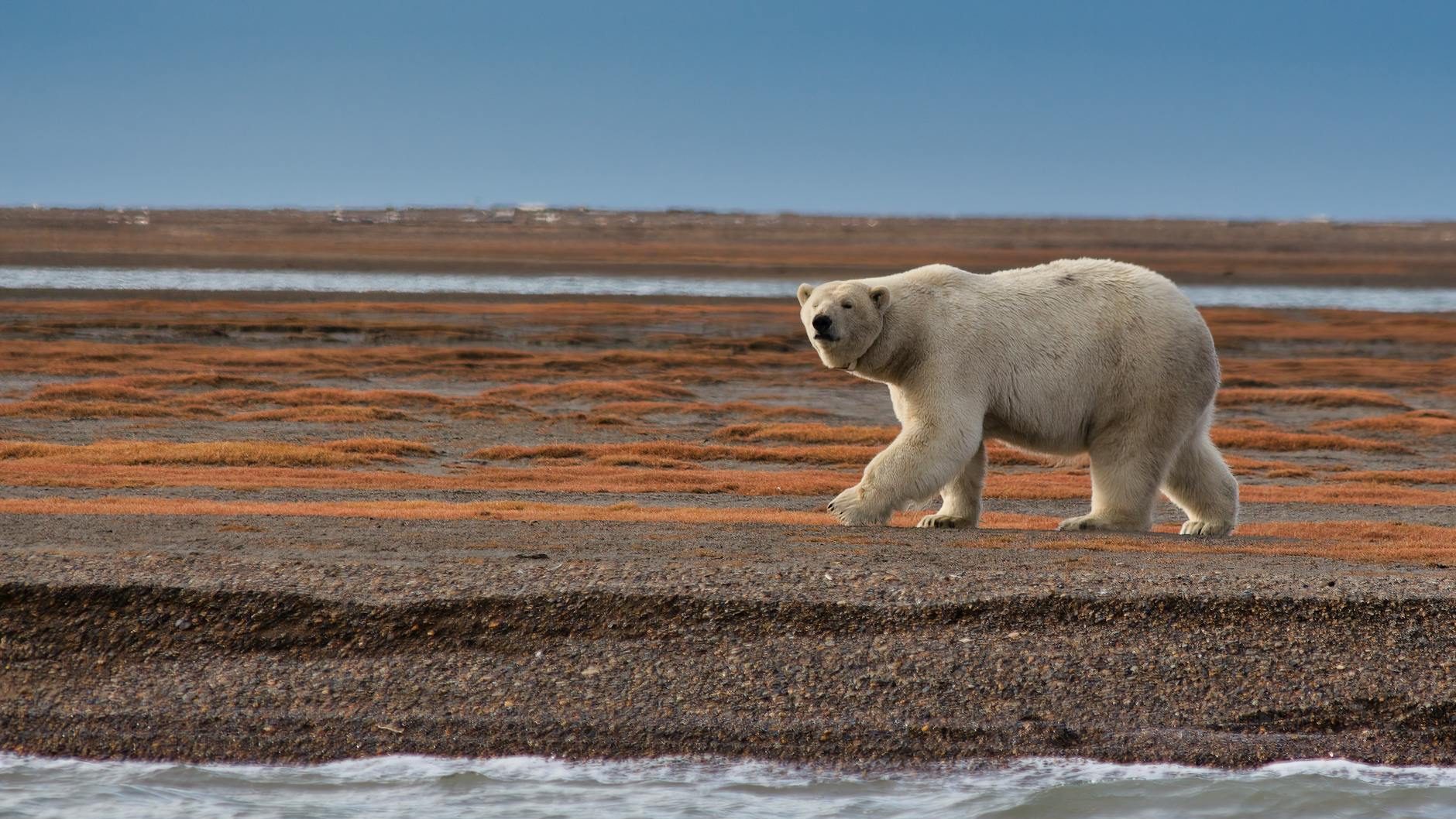
Millennia before the United States of America was a concept, humans settled Greenland in several waves. The first wave consisted of Inuit peoples, who arrived via ice bridge to the island from Canada around 2500 BC. In 985 AD, Norse explorers reached the island and established settlements, but abandoned them 400 to 500 years later. The final wave of settlement was Inuit people from Alaska in 1200, who represent the ancestors of about 90% of today’s Greenlanders.
Greenland became a Danish colony in 1841, and attempts at US acquisition began soon thereafter. Upon purchasing Alaska in 1867, Secretary of State William H. Seward campaigned for US ownership of Greenland. He believed controlling Greenland would ensure US supremacy over the Western Hemisphere by allowing strategic access to Canada and Europe. Seward’s attempts to acquire Greenland failed, along with attempts by various US politicians throughout the late 19th and early 20th century. All of this changed in 1940, when the Nazis invaded and occupied Denmark. In order to ensure security for North America, the US invaded Greenland and signed a treaty with Danish ambassador to the United States, Henrik Kaufmann. This treaty established the US as protectorate of Greenland and allowed the construction of military bases and outposts on the island. After Nazi defeat and the formal end of World War II, Denmark failed to regain total control of Greenland. Weak in the aftermath of German occupation and war, Denmark did not have enough leverage to force the US out of the island. As a compromise, Denmark and the US signed the Greenland Defense Agreement in 1951, which gave the US broad freedoms in operating military bases on the island. Two years later in 1953, Greenland ceased to be a colony and was incorporated as a Danish county.
US interest in Arctic politics began to rise again in the 21st century in response to increasing Russian activity and influence in the Arctic. Tensions reached their peak in 2007 when Russians planted their flag underneath the North Pole. What followed were negotiations and discussions between the group of countries known as the Arctic Five: Canada, Denmark, Norway, the Russian Federation, and the United States. These meetings resulted in renewed dedication to combat the effects of climate change in the Arctic and manage political disagreements through existing legal channels. In the midst of the Arctic Five meetings, Greenland became independent from Denmark in 2009, though the Danes maintained control over Greenland’s foreign affairs.
In 2019, Trump expressed interest in buying Greenland and was met with ridicule and disbelief from Greenlanders and Danes alike. The offer did not result in serious negotiations, and Denmark reiterated that Greenland was not for sale.
Trump’s recent proposals to acquire Greenland came soon after his 2024 election, in which he intensified his rhetoric by implying that the US would use military action if necessary. Trump’s threats and desperation likely have to do with Greenland’s mineral wealth. Previous US negotiations regarding Greenland primarily focused on the island’s strategic positioning for defense. However, the Greenland that previous administrations wanted to acquire looked much different than it does today. Climate change has caused Greenland’s ice sheet to rapidly melt. Since 2002, Greenland has averaged a 296 Gigaton loss of ice per year. To put that amount into perspective, just one Gigaton of ice would cover New York’s Central Park and be over 1,000 feet tall, roughly the same height of the Empire State Building. The thinner Greenland ice sheet means the previously locked-away mineral resources are now open to mining.
With access to Greenland’s minerals, the powerful tech-oligarchs who donated to Trump’s campaign and inauguration fund could multiply their already enormous wealth. Amazon CEO Jeff Bezos and venture capitalists Marc Andreessen and Ben Horowitz are investors in the AI-powered mineral exploration company, KoBold. The company has multimillion dollar projects in Greenland to identify rare earth mineral deposits needed to manufacture necessary components for artificial intelligence, electric vehicles, and high-performance computing. US control over Greenland’s mineral resources could hand Trump’s biggest donors a complete technological monopoly.
The tech bros backing Trump envision a future of unfettered technological progress and unregulated markets. Their ideology believes ethics, collectivism, gerontology, and socialism are enemies of progress. They desire a world where they can do whatever they want, whenever they want, without any consequences or deference to democratic processes. Trump plans to deliver Big Tech the future they desire. His administration has already slashed regulations for mining industries, cut IRS units investigating billionaires, and pardoned a scammy cryptocurrency company. What we are seeing is only the beginning.
Big Tech wants to create an unrestrained monopoly by colonizing Greenland. Their bid to seize the island for its mineral wealth reflects a colonial-capitalist regime that has existed in North America since the arrival of the first Europeans. The history of one of North America’s most influential colonial corporations, The Hudson’s Bay Company, provides us with insight into how these regimes function and ultimately fail.
The History of the Hudson’s Bay Company: Capitalism Goes Abroad
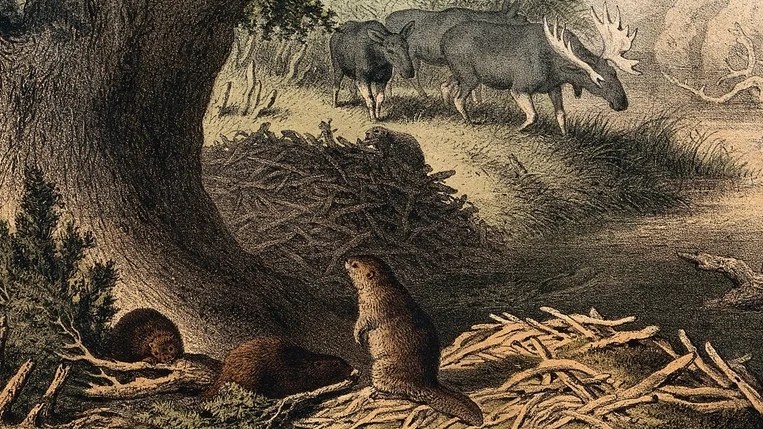
Although the Hudson’s Bay Company (hereafter HBC) would eventually become a behemoth monopoly, it began with the humble aspirations of two New France explorers and brothers-in-law, Médard Chouart des Groseilliers and Pierre-Esprit Radisson. After initial explorations west of Lake Superior led to the discovery of abundant beaver pelts, the two entrepreneurs traveled to London in search of financial backing to setup fur trading outposts in the area around Hudson Bay. They achieved their goal and found support from Prince Rupert and his cousin Charles II, the reigning king of England, Scotland, and Ireland.
King Charles II issued a royal charter that granted the HBC claim to approximately 1.5 million acres (almost 61,000 hectares) of land that drained into the Hudson Bay, and established a legal monopoly over the fur trade. The land that Charles II signed away was not his to do so with, as it was already occupied by tens of thousands of Indigenous inhabitants.
What followed were several decades of European exploration, trade, and outpost building. The HBC’s business model was relatively simple: build outposts along major waterways, trade with Indigenous people or other middlemen who brought furs from farther inland, and then sell those furs to Europe for a profit. This radical change to the area brought about equally radical social and economic change to the Indigenous ways-of-life. Diseases from close contact with European traders disrupted pre-European social structures. Smallpox outbreaks resulted in entire cultures being wiped out, and existing social ties were severed in the chaos of mass death. Indigenous economies were entangled in European capitalism, as communities became reliant on imported goods, such as rifles, knives, and metal cookware. The abrupt economic changes exacerbated existing tensions between Indigenous groups and lead to increased intertribal competition, overexploitation of natural resources, and war.
The chaos following the expansion of the North American fur trade also revealed to European powers how dependent they were on Indigenous peoples. Indigenous deaths from disease affected the HBC’s bottom-line. They could not function without Indigenous labor and knowledge, while Indigenous peoples depended on European products. This interdependence led to mutual respect between European and Indigenous laborers, as well as cultural exchange and intermarriages. What emerged over time was a distinct culture defined by shared European and Indigenous heritage, and the beginnings of the Métis people. These people and their burgeoning nationalism would later play a large role in the eventual downfall of the HBC’s monopoly in the latter half of the 19th century.
In 1821, the HBC expanded its monopoly on fur trade in the region when it merged with the competing North West Company. The merger represented a major change for Indigenous and Métis people, who benefited from the ability to negotiate for higher fur prices between the two companies. In the aftermath of the merger, the HBC implemented stricter restraints on Métis people to prevent trading outside the company. The HBC searched Métis homes for any contraband, confiscated and read mail, and intercepted Métis carts traveling within the company’s land.
The tensions between Métis and the HBC peaked after Métis men seeking to trade outside the monopoly were arrested. The arrest lit the already short fuse of Métis anger. On the day of the trial, Métis crowds arrived heavily armed and refused to turn over the men on trial. Instead, they handed the judges their list of grievances and demanded freedom to trade. In the end, the arrested men were not punished, and the Métis had weakened HBC’s control of the courts, effectively ending their monopoly.
The Métis would continue standing up to corporations and governments throughout their history. Conflict would result in the coalescence of Métis identity and their recognition by the Canadian government. Today, Métis people continue to be innovative entrepreneurs and political activists. Indigenous and non-Indigenous people worldwide can apply the Métis example to the new, complex threats we face today.
Fighting Colonial-Capitalism and the Tech Bros Who Want it All
The history of the Hudson’s Bay Company is the story of a corporation that created unimaginable wealth built on human suffering and collapsed under the weight of its own hubris. The heroes of this story are the working class Europeans and their Indigenous and Métis counterparts who, without realizing it, created the conditions that would liberate their descendants from an immense and powerful monopoly. It is a story that resonates today, as Big Tech seeks to consolidate their power and wealth at the expense of everyday people. The men who want to lay claim to Greenland for its mineral wealth are similar to the historical monarchs who helped write the playbook for modern colonialism.
The ultra-wealthy tech-oligarchs of the 21st century are a new breed of colonizers. They have deep political ties, high-tech surveillance, and modern methods of social engineering. Their ideologies stand in direct opposition to the Inuit cultures they seek to colonize—cultures that value the wisdom of elders, respect the land and animals, and make decisions on the basis of communal discussion and consensus. But these men and their institutions still suffer from monarchy’s fatal flaw—they underestimate the little guy. They underestimate his intelligence, strength, and ability to organize collective action while maintaining strong individualism.
History can show us many things. In the case of the Hudson Bay Company, it shows us that colonizers always get wealthier while the colonized get poorer. But that history also reveals the irony inherent in colonial-capitalist systems—they cannot function without the very people they dispossess.
More importantly, history shows that Indigenous resistance works. Grassroots resistance works. Collectives of diverse, working class people, bonded by a common goal against tyranny, can win. They have won. We have the leverage, and the numbers, to force these corporations and governments to either work for us, or cease to exist. The Métis and many others have shown that holding corporations accountable and using the courts is key to long-term success. They proved that arriving in strength and solidarity is the only way to get those in charge to listen. We are at the cusp of another historical moment. As Cory Booker said at the end of his record breaking Senate speech, “It’s not left or right, it’s right or wrong”. My Métis ancestors spent their lives fighting for what is right, and I intend to honor them by doing so myself. I ask you to join me.

 Kian Speck
Leave a comment